
The week before last (17-23 March) was Neurodiversity Celebration Week. Yesterday (30 March) was World Bipolar Day, and today (31 March) is Transgender Day of Visibility. And Mercury is in the microwave, too. As a trans person with bipolar II, autism and ADHD, I am feeling very, very seen right now. Honestly, it’s a lot to process! Here’s a short list…
Transgender Day of What, Exactly?
Today I have read maybe 100 posts by non-profits marking Transgender Day of Visibility and not a single one* has acknowledged that we are under attack by organised right-wing anti-gay and anti-trans ‘anti-rights movements.’
This is terminology the UN human rights community has adopted to describe the evangelical Christians and social conservatives who have successfully advocated the death penalty for ‘aggravated homosexuality’ in Uganda.
The phrase ‘anti-rights movements’ leaves religion and politics out of the picture, which matters in a human rights context where religious and political freedoms are very much live issues. I gave a guest lecture on this topic for a Masters-level course on ‘Law and Morality’ at the University of New England and I felt super awkward and vulnerable talking about religion and politics as driving forces behind these movements; particularly in a legal setting these are topics we bracket out of legal discourse as matters for priests and politicians. But outside of the UN human rights system I think it matters to retain the specificity of queer politics, which has always included naming our enemies.
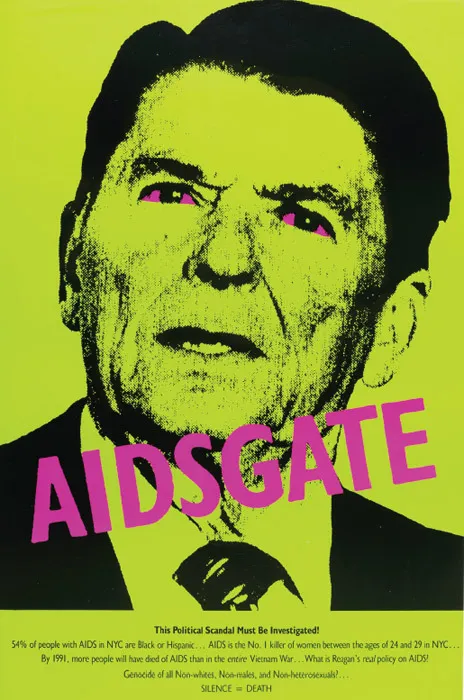
Many people in Australia’s queer and cishet communities are watching with dismay and despair as the Trump administration wages war on ‘diversity’ with attacks on queer and trans young people and athletes as its spearhead tactic.
It’s tempting to believe this kind of politics wouldn’t fly in Australia and a very timely bit of polling by Transcend reported that 89% of poll respondents did not want to see trans people turned into a political football in the election. This polling was an incredibly savvy political intervention and I tip my hat to the clever trans folk working behind the scenes to make it happen.
But that ship has sailed. Anti-trans politics already has a foothold in our electoral politics. Movements like Binary Australia and moral entrepreneurs like [redacted name of clinician] have succeeded in getting the Crisafulli government in Queensland to block life-saving gender affirming care for young trans people in that state. This is not just happening in Trump’s America, it is already right here in Australia.
Some of my friends joke about renaming the occasion to the Transgender Day of Vengeance and in my current mood I am all for it. In particular I want an apology from the left-bros who described trans inclusion as a distraction and through their inaction allowed it to metastasise and spread.
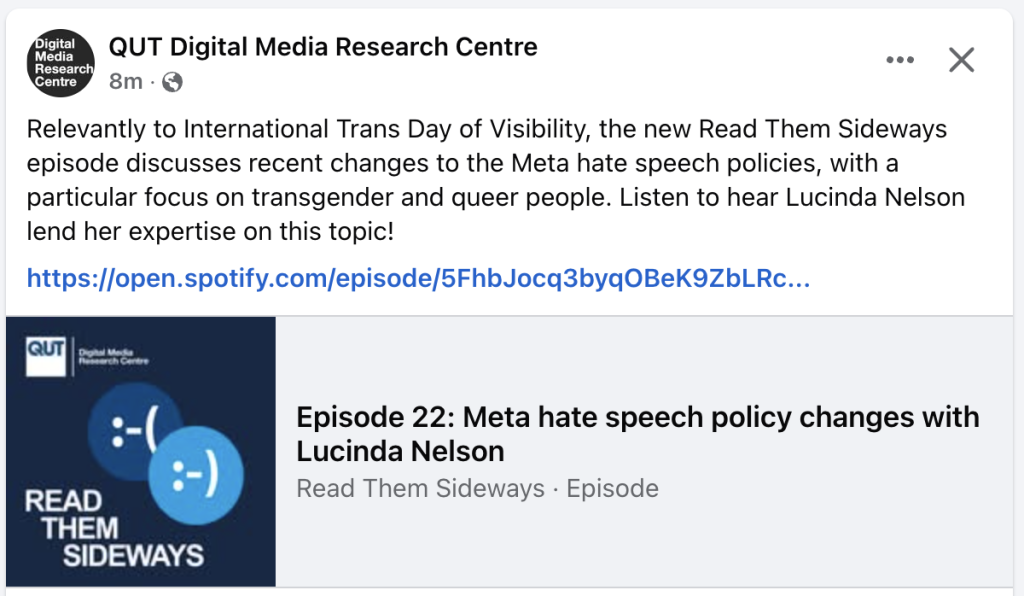
* Edit: shout-out to the QUT Digital Methods Research Centre for the only post I’ve seen that acknowledges the crisis — and promotes a podcast episode profiling their own research talent and outputs! Top-notch comms, team.
Rethinking the ‘neuro’ in neurodiversity
I feel like I am forever ‘coming out’ about my mental health and illness and it never seems to go well — even the kindest, most thoughtful people seem really startled that I am disclosing something that mental illness stigma leads them to assume I should keep as private (indeed secret) as possible.
For Neurodiversity Celebration Week, I posted two short LinkedIn updates, and while my posts there usually attract a pretty decent response, these contributions are currently rolling with tumbleweeds.
You are using neurodiversity wrong
Neurodiversity and neurodivergence are not umbrella terms for pathology and disorder — usages that mimic the way people increasingly say ‘queer’ because they think LGBTQIA+ is a mouthful, without any awareness that these terms index very different social and political projects.
Rather, exactly like queer, these are political concepts, not just a list, and we can use them to rethink the relationship between brain differences and disability. Here’s a great short read on that idea by advocate Jesse Meadows.
Shout-out here to neurodiversity activist Sonny Jane Wise whose book We Are All Neurodiverse argues that all brains are neurologically different from each other (i.e. neurodiversity) but only some differ from population norms in ways we label as autistic, ADHD, dyslexic, dyspraxic, etc (i.e. neurodivergence).
But maybe it isn’t ‘neuro’ at all?
The prefix ‘neuro’ is really problematic when talking about social, cognitive, emotional, perceptual and other differences seen in people with autism and/or ADHD.
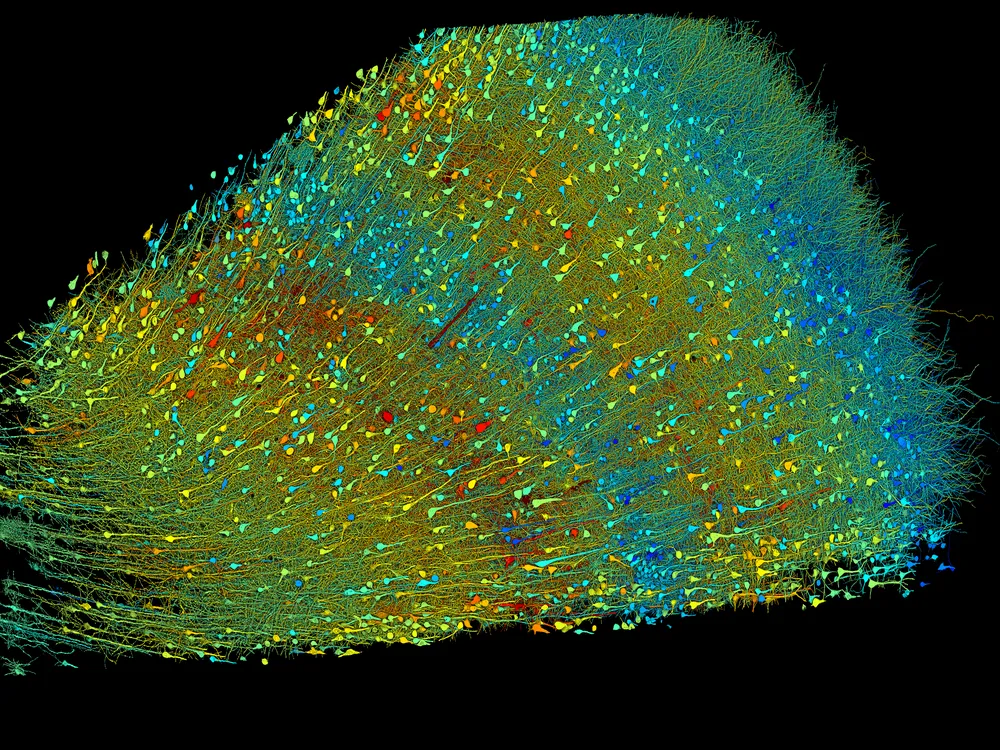
This short piece by the Smithsonian makes the problem clear: we are absolutely nowhere near close to understanding human neurology well enough to state with confidence these conditions are neurological.
One very common explanation of autism cites a study that found neurons had more branches in autistic people, and we over-interpret that finding endlessly. This new model gives us perspective on how little we actually know.
Without that understanding of the neurology, we can’t disentangle neuro from social, emotional and cognitive factors, or nature from nurture, or indeed how subtle features of the present situation may trigger behaviours in a neurodivergent person (a social interactionist perspective).
Rather than talking about brain structure and function as if they pre-exist personality, mood, cognition, emotion, language, motivation, sociality, etc, we should be talking about the interplay of all of those things together.
Personally I would prefer something like ‘cognitive and social diversity’ as a better term for capturing the whole group of characteristics that we currently describe as neurodiverse and neurodivergent.
Bipolar kicking off
Just in time for World Bipolar Day, and channelling Mercurial energy, I have spent the weekend trying to sleep off a hypomanic spell that kicked off during the week. A script bungle meant I couldn’t get my longer acting stimulant ADHD medication and had to rely on a much shorter acting version of the same drug. It’s easy to time the doses wrong and I wound up barely sleeping one night, and that’s the ballgame — that’s all it takes to trigger an episode for me.
This has happened before and I have a stash of a benzodiazepine that I can use. Effectively I take long daytime naps, with my earplugs in and my double blackout curtains drawn, until the scattered thinking and crankiness subside — which has now happened — and then I’ll have to spend a week or two trying to forcibly drag my circadian rhythm back to some semblance of normality.
During the week I took part in a couple of meetings where I was aware that my speech was affected — sometimes too rapid, sometimes disjointed. Although I’m still a reasonably articulate person, problems with speech production are part of my new normal since my bipolar diagnosis, partly due to the disorder but one of my medications is notorious for causing these issues as well.
That’s why I find myself disclosing my bipolar status to colleagues and contacts, encountering those startled reactions and that implicit question, ‘why would you share that about yourself?’ I am a little disappointed that people working in the HIV response don’t better understand the power and politics of disclosure. But I am happy to keep furnishing them with opportunities to practice empathetic and effective responses like ‘thank you for telling me; are there any adjustments I can make to support you in your work?’