The app we should have had

Early this year the federal government announced it was buying in a contact tracing app that hadn’t worked in Singapore. The ‘CovidSafe’ app uses a wireless protocol to connect with nearby phones that are also running the app, to record an encrypted ID for each person the phone’s owner had contact with. The government refused to wait until Apple and Google had released an update that solved key problems, such as the way iOS shuts down apps that aren’t in use, particularly when the phone is locked. It claimed the app would allow us to exit lockdown and return to public life, so long as at least 60% of the population downloaded and installed it on their phones. However, total downloads stalled around 25-30% of the population, with the public perhaps remembering the privacy fiasco over the MyHealthRecord. The state governments that actually do the contact tracing reported it was of no use, and it was quietly dropped.

The app was meant to compensate for a human flaw — the difficulty of remembering where we’ve been and who we’ve met, going back up to fourteen days from exposure through to viraemia and finally immunity. Indeed, we don’t know who we’ve met on public transport, or in the queue for the supermarket. The design aims to take the human agent out of the picture altogether, instead relying on cool, hard technology to capture encounters with machinic precision. Yet the design and implementation embed and reflect the all-too-human vices of hubris and impatience, and what Evgeny Morozov called ‘solutionism.’ 

The problem that needs solving

It was also a gigantic missed opportunity to design an app that could have solved a long-lasting problem for citizens and governments alike. Imagine, instead of assuming humans are incapable, we designed something that could support and enhance our capability. We are deluged with information about the outbreak and limited in the time and effort we can devote to processing it. Reflect for one second on how you get your information about the outbreak: daily press conferences top the list, followed by media coverage of them and social media conversations about them. The situation is dynamic and right now, restrictions are changing almost daily. The amount of information that we need to process and respond to can be overwhelming, even for English speakers —and as far as I’m aware, no government translates them into other languages. 

I want to single out one issue: indications and requirements for testing. Each day, governments release a list of locations and times. If you were at the Apollo Restaurant in Potts Point on August 28th between 11AM and 9PM, please… go straight into quarantine? Seek testing? And then what — stay home until you get a negative result, or go about your day-to-day life? Misunderstandings about these requirements have become a matter of national scandal, fuelled by governments shifting blame for the outbreak onto ‘individuals doing the wrong thing.’ But their communication is haphazard. I just got a swab at a respiratory clinic and received no instruction to isolate until I got a result. And apart from the difficulty of remembering when you were there, this approach relies on people catching a momentary reference to the restaurant in media coverage. 

’If you were on the 8.12am service departing Central to Sydenham, please seek testing…’ Was I on that service? I caught a morning train at Museum, who knows what time it departed Central. Nah, probably not.

What the app should do instead

A few years back I was a bit startled, but basically pleased* to discover the Google Maps app had been tracking every trip I made, every day. (* This is pretty creepy but quite useful if you’re an ethnographer like me.)

Screen captures for my Sunday adventure from the Google Maps app

So just do that: remember where I’ve been, for me. In the second image, Google Maps is asking if I was at my usual morning café Warren & Holt.

If NSW Health announces there’s a case or cluster associated with that location, the app should notify me. If I take a long train journey and NSW Health later discovers one of the other passengers was a case, they can publish that information in a machine-readable format. The app checks that information for updates and if it matches my own data, it can notify me. In this vision, the app would not ‘phone home’ and notify anyone else. This is an approach to contact tracing that empowers the user, providing a precious resource — tailored information — and trusting them to act on it.

Edit 6 Aug — writing late at night, I sometimes forget to mention my main point. In this case: if I am traced as a contact or I get a positive test result, I can use the app to remember and relate details of my travels and encounters. I don’t need to send any data to the contact tracers other than by having a conversation with them, which allows the contact tracer themselves to use their own practice wisdom and personal intuition to ask questions an app could never answer.

This suggests a second function. I’m a reasonably educated guy, I can follow a complicated recipe, I’m literally a regulatory scholar, and I still find some of the advice on testing, isolation, and quarantine requirements confusing. The app should just tell me, here’s the nearest Covid-19 testing clinic. Here are their opening hours. Here’s a link to make an appointment. You should go home and stay home until you’ve had that test and got your result. If you need it, here’s a link to apply for a cash payment in case you have no income or paid leave. These details vary from one jurisdiction to another. The information should be supplied by governments in a format the app can parse and present to the user.

Finally, a third function. When regulations and services change, governments should be able to push out notifications to app users based on their location. This should be systematic but sparing, to avoid overwhelming app users. And — fucksake — governments should translate this information into languages other than English. If government is announcing new restrictions that can create criminal liability, it’s a matter of basic human rights that it translates the announcement into the languages in use in the whole community. It shouldn’t be left to communities of people trying to cope with the cops showing up and locking down their residential towers to make their own translations on the fly. The app should provide easy access to updates on the current situation in multiple languages, easily shareable via chat apps and social media. 

Who should do it?

Google, with input from Apple. The federal government dropped the ball. State and territory governments will take forever and develop their own separate apps with varying degrees of functionality. And none of these apps will have access to the location data Google already collects — the routes taken and the database of premises, transport routes, etc. Google should define the machine language and establish a secure API for accredited government users. It has existing expertise in interface design, user testing, security, hardware integration and regulatory compliance.

The key to this approach is that it coordinates the strengths of different actors: Google for apps and platforms, governments who determine regulations and provide information, and users, who almost always want to do the right thing if they are supported to do so. The last is a foundational principle for both adult education and social marketing — people see themselves as independent actors and respond best when you respect their agency and empower them to act.


If you would like to support the work I am doing, a small donation would be gratefully accepted — but sharing this post would be equally awesome!

Donations will be used to support this blog and reliable, independent health promotion initiatives like RinseNRepeat.info.

Covid-19 spreads like glitter

I’ve written a couple of pieces expressing evidence-based doubts about the value of general public mask mandates as an epidemic control strategy. In them, I acknowledge that we know masks work when Covid-19 is present, and encourage people to make and wear face coverings if that would make you feel safer. Let me add a third note: if government in your part of the world mandates wearing masks, I strongly encourage adherence. Epidemic control is not an opt-out endeavour.

My last piece expressed concern that debate over masks has been a distraction from the real drivers of the outbreak in Victoria — the networks of transmission among precarious workers and workplaces in aged care, child care, meatworks, fast food and freight. It’s very easy to focus on individual behaviours and whether people are doing the right thing, and much harder to think and talk about social structure and complex networks. Indeed, I have come to suspect Premier Dan keeps talking about individuals doing the wrong thing because it functions so well as a distraction from government failures. But I have been encouraged by the public conversation about precarity and the need for paid pandemic leave and other forms of job security. 

As I noted, mask advocates often claim that Covid-19 is airborne. The people who advocate masks are the same people who advocated ‘go hard, go fast’ on society-wide shutdowns. I am in two minds about how sincere they are, since there’s an important contradiction in their claims. If SARS-CoV-2 can be passed on via droplet nuclei, which are particles 1-5 microns in size that can hang in the air, then wearing a surgical mask or improvised face covering is not going to have any protective effect whatsoever. But there’s another effect in play, which I’ll call reverse reasoning. Let me give an example.

As a public health practitioner, I look carefully at the science on transmission routes, and then I consider what devices and practices could interrupt them. But members of the public don’t have the training or the time to engage in that kind of systematic consideration. I’m not an expert on the environment, for example. I encounter facts and recommendations in everyday life, and as a moderately curious person I try to work out the links between them. When my local council provides a recycling bin, with a detailed list of what can and can’t go inside it, I reason backwards from that to develop a mental model of recycling as an environmental practice. I assumed the contents of my recycling get sorted and returned to Australian packaging manufacturers. It was a big surprise to discover it gets shipped en masse to China and ends up as landfill.

Because the federal government made such a mess of explaining the rationale for its control recommendations early in the outbreak, many people have used reverse reasoning to fill in gaps in their understanding of Covid-19. The clearest example is the anxiety and rage people feel and express about momentary breaches of the recommendation to keep 1.5m physical separation in public. Reasoning backwards from this recommendation, they have concluded that Covid-19 must be easily transmitted via brief, casual contact in public places. We’ve known since early in the epidemic that this is not the case, but people don’t understand why not, leaving them open to competing explanations. The notion that Covid-19 is airborne is a perfect fit for that mental model.

In a crisis, a group of cranks can easily out-communicate a government. They have one issue and that affords them excellent message discipline, while the government has to communicate across a whole range of issues. They can just keep banging the drum, keeping their issue on the media agenda until the government gives in, precisely because it needs the airtime for other issues. A simple message will beat a messy, complex set of messages every time — just ask John Hewson or Bill Shorten. But we should ask why some people seem so determined to ‘beat’ government in the first place. The answers are not pretty. They include relevance deprivation syndrome, hunger for public profile, and feeling overlooked for a role in advising the government response. 

(But enough about me.)

The truth is always messier than a message. In the remainder of this piece, I want to explain the difference between airborne and droplet transmission. When you understand the basics, then you develop literacy that allows you to make sense of the more complex and uncertain aspects of the bigger picture. My hope is that enough people will read it and become the seeds of a diaspora, becoming informal educators in a culture of care around Covid-19. 

By contrast with formal education, which follows a plan of topics and activities, informal education has no curriculum. It happens spontaneously, when you spot a fleeting moment of opportunity in a conversation on equal terms, and you know just the right thing to say to tweak how someone understands the issue. It can’t be planned-for, but you can be prepared. And metaphor can be a powerful (albeit unpredictable) strategy for informal education.

So here’s the metaphor: Covid-19 spreads like glitter.

Airborne transmission is sometimes explained as involving droplets of respiratory secretions less than 5 microns in size, which can hang in the air and travel on air currents more than 1.5 metres from their source — even after the infected person has left the room. Droplet transmission is said to involve larger droplets that fall onto nearby surfaces, or get caught in our hands when we smother a sneeze and then transferred to another person when we shake hands or hug each other. This size distinction has been criticised. And, to be honest, this doesn’t seem enough to explain the incredible contagiousness of the condition, right? Surely it’s airborne.

Here’s how comedian Demetri Martin describes glitter:

Glitter is the herpes of craft supplies. 😘👌

People often think airborne transmission includes direct spatter from coughs and sneezes, but it doesn’t — that falls under droplet transmission. Glitter can fly through the air when propelled by a glitter cannon, and it can go everywhere after that, but it doesn’t hang in the air. Covid-19 is the same. 

And it’s still plenty transmissible. No matter how careful you are, if you use glitter in your craft project, you are going to spread it all over the place — by touch alone. If you air-kiss someone wearing glitter make-up, you are going to get it on you. If you get it on your hands, cuffs, phone cover, wallet, face mask, then you are going to transmit glitter to other people you meet and touch. And you’ll do all of those things unconsciously, even if you make a real effort to keep it contained and vacuum your craft space. Covid-19 is the same.

The finest glitter particles are 200 microns in size. That’s way bigger than the droplets that we create when we cough or sneeze (or snot all over ourselves). And yet they are highly, highly transferable.

We do not need airborne transmission to explain why Covid-19 is contagious.

Metaphors only go so far. One big difference is that glitter is forever — plastic glitter will take a thousand years to break down — whereas particles of SARS-CoV-2 will break apart with soap and water or hand sanitiser, and will be inactivated fairly quickly when deposited on surfaces. Another big difference is that glitter spread ceases when its point source is exhausted, whereas Covid-19 can keep infecting new hosts and creating new sources. But you can use this metaphor to understand and explain the considerable potential for spread via particle deposition and transfer.

This is why social distancing is so important. We know from studies of infection control in hospitals that medical staff require significant training and monitoring to use personal protective equipment correctly. To avoid catching glitter, your best strategy is to avoid dance parties indoor social gatherings, stay home as much as you can, and limit visits by people who could track it into your house.

Bonus for reading this far: enjoy this gorgeous track by NZ artist, Benee.


If you would like to support the work I am doing, a small donation would be gratefully accepted — but sharing this post would be equally awesome!

Donations will be used to support this blog and reliable, independent health promotion initiatives like RinseNRepeat.info.

Shut the schools down

But the reason is not what you think

For the past 3 weeks I’ve been spending time on twitter, monitoring the emerging response to the Covid-19 epidemic and, as we learn more, translating scientific ‘signals’ and policy responses into plain language.

In the past week, that role has become controversial.

I wrote in my last post about how our Prime Minister has politicised the reliability of communications. The government has taken to late night press conferences where it announces a laundry list of restrictions with no clearly apparent underlying principle. Journalists and health promotion people are united in agony at this spectacle.

The government’s ongoing failure to show its workings has important implications for adherence with recommendations. As I’ve argued, people don’t adhere to recommendations they don’t understand. This includes people (of all ages) going to cafés and pubs, for example, breaking recommendations of physical separation and avoiding mass gatherings.

But reactance against poorly-understood recommendations can go in the opposite direction as well — people being hyper conscientious, and people being utterly convinced that current recommendations are totally inadequate.

The public debate over how we are responding to Covid-19 is increasingly focused on demands for school closures. People are quite rightly observing that kids can get the virus and pass it on. Intuitively, that makes sense, right? Kids are little grot monsters and childcare is a swap meet for bugs of all kinds — every head cold going, flu, gastro, nits, hand and mouth, you name it.

All the same, AHPPC says there’s no evidence kids play a major role in epidemic transmission and it does not recommend school closures. That looks like a huge contradiction, and the failure to explain it has left a lot of people feeling severely mistrustful of the response.

Along with a small crew of co-authors on a recent Conversation piece, I’ve been active on twitter trying to explain what Prof Tony Blakely calls the ‘missing rationale’ for Australia’s responses to the Covid-19 epidemic.

Some of the most bizarre inconsistencies, like weddings being capped at five people but fitness boot-camps being allowed ten, are a little easier to understand if you know that Covid-19 is most easily passed on via close, sustained contact. Sitting side-by-side in pews for 90 minutes affords a better chance of viral transmission than doing star jumps 2 metres apart, outside.

(Others, like allowing barbers to remain open, are just bizarre and inconsistent.)

So this past week on twitter I’ve been making the point that school closures are not supported by evidence… and encountering increasingly caustic responses.

Such as Amy Thunig saying ‘you’re not an expert, you’re not an epidemiologist, you’re just a health communications guy.’ Somehow overlooking the fact our epidemic response is currently paralysed by our government’s inability to communicate effectively, and there’s an emerging political crisis about that.

The demand for school closure fits the pattern I described in my post on panic. Processing complex messages is much harder in high energy emotional states like alarm, distress, anger and panic. People in those states reject emotionally dissonant messages, e.g. if the tone isn’t suitably urgent, the speaker is seen as untrustworthy and the message is discounted.

School closure is simple, urgent, and decisive.

Here’s the counter-argument:

  • The WHO Joint China investigation found that in China, which had one hundred thousand cases and aggressive tracing of contacts, children were much more likely to be infected by their parents than the other way around.

  • Other countries like Singapore have controlled the outbreak without closing schools, albeit with much higher collective adherence to social distancing (physical separation) recommendations;

  • In Australia, data on cases and contact tracing shows very few infections in young people — at the time of writing, in New South Wales, only 27 out of 818 total cases were under 19 years.

  • Modelling studies show that school closures won’t help, and a study published today from the University of Sydney shows they may lead to more children becoming infected via contact with higher risk adults.

But it seems nobody’s buying that. It is contradicted by the widespread belief that there is exponential community transmission that is not being picked up in our data.

These two beliefs — infectious kids, unobserved transmission — have formed what sociologist Erving Goffman called a strong discourse. Normally you validate a model against empirical data. In a strong discourse, if the empirical data doesn’t fit the model, it’s the data that is rejected.

We see that happening when we attempt to persuade anti-vaccination advocates and climate denialists with evidence. They reject empirical findings as logically inconsistent with prior beliefs, even though nothing about the universe obeys the laws of logic.

It’s happening now with Covid-19 control, and that is an extremely concerning development. It has the potential to compromise the ability of governments to communicate not just the rationale for action, if they ever felt like doing that, but what we need people to do.

It can also poison the political conversation.

We’ve spent a week on an increasingly heated argument about school closures. They have driven a split through the ‘national cabinet’ of state and territory and the Commonwealth governments, with Vic and NSW going their own way. And while that has dominated the news, we haven’t been talking about the devastating effects of the epidemic and control measures on people’s livelihoods.

This week we saw the modern-day equivalent of bread lines snaking around the block, as people tried to get their identity validated so they could complete online claims for social security payments. We have a huge population of temporary residents who are not eligible for those payments and therefore have to keep working, putting them at increased risk of exposure to SARS-CoV-2.

Some twitter users have argued the government, in trying to minimise restrictions and their impact on employment, is putting dollars before lives. Others have demanded the government tell us all it knows.

But there’s no big secret there.

The government is sitting on epi modelling that predicts tens of thousands of deaths as hospitals are overwhelmed. That isn’t a secret; it’s the premise for flattening the curve, which many people now recognise, if not understand precisely. It is also sitting on economic modelling that predicts millions jobless and multiple years of recession. And it is trying to negotiate a way forward with both of those things happening simultaneously, knowing those predictions could spark widespread panic.

We need to be talking about that. We need to talk through what that means.

So let’s close the schools and move on with the public conversation.


If you would like to support the work I am doing, a small donation would be gratefully accepted — but sharing this post would be equally awesome!

Donations will be used to support this blog and reliable, independent health promotion initiatives like RinseNRepeat.info.

In a crisis, promote reliability (Part II)

This is Part II of a three-part series about effective communication during crises like our current pandemic of Covid-19. In Part I argued To avoid panic, promote efficacy. This post looks at how we can craft reliable communications during times of crisis. A third post will take a longer view, looking at anticipating inequity in how we respond to crises.


I’m calling this model TAPPER.

TO AVOID PANIC

(1.) PROMOTE EFFICACY. (2.) Promote RELIABILITY.

And always (3.) Anticipate Inequity.


Don’t need the explanation?
Download a one-page tip sheet here.


I was initially concerned this post might be a bit technical, relevant only to experts and insiders. But reliability has become a major political issue over the past week of the online conversation about Covid-19 and Australia’s response to the outbreak. People have been making and circulating ‘home-brew’ graphs, many from engineers and IT guys. Without any modelling skills at all, and without any information on Australia’s outbreak other than infection numbers, they visualise doubling time and little else.

Continue reading “In a crisis, promote reliability (Part II)”

To prevent panic, promote efficacy and reliability

The coronavirus pandemic is a rapidly evolving situation. Much remains unclear about how the virus behaves in the body and how it moves in the community.

Here is an excellent summary of what we know, and what we can all do.

Governments have been muddled in their messaging, and with a few exceptions, slow and indecisive in their responses to the outbreak.

In the absence of effective messaging, some commentators have taken to social media, writing blog posts, tweet threads, and even making memes to communicate information about the pandemic. Some are better than others, and some efforts are downright misleading or actively counter-productive. In some cases, we have people communicating outside their usual scope of practice, and beyond the limits of their experience and expertise.

A particular concern is that some of these DIY educators are communicating in a tone and style that encourages panic.

Continue reading “To prevent panic, promote efficacy and reliability”

Beyond cancellation: accountability and the Sydney queer community

I am everything that Katherine Wolfgramme loves to poke at on her social media: lefty, non-binary, and a lover of queer theory. Because I am those things, I am concerned about the recent letter campaign against her. The campaign calls on Katherine to stand down — or be stood down — from her positions as an Associate of the Mardi Gras Board and an Ambassador for the Gender Centre. (In these comments I am only writing about the open letter to Mardi Gras published in early December 2019.)

Although this piece is forthright about the problems of that campaign, I am writing it as a call to dialogue. There are material issues raised on both sides, and our communities can benefit from talking through them. But that conversation cannot happen in the situation as it presently stands. It both highlights the need and presents an opportunity to develop accountability processes that go beyond callouts and cancellation in response to conflict and misconduct.  

I’m going to delve briefly into the substance of the campaign, mainly to highlight the important issues that are in play, the problems with unchecked interpretation, as well as the high stakes involved. But I’m focusing mainly on the accountability of the process, and I’m calling for the Sydney queer community to develop effective and non-violent accountability processes. This is a matter of fair process, transparency, understanding our history and being aware of different kinds of power. This is not about defending Katherine — it’s about the consequences for our community if we don’t find a way to raise and resolve the issues, which affect us all. Demands for accountability must themselves be accountable.

Roiling waters in the ocean
Continue reading “Beyond cancellation: accountability and the Sydney queer community”

Strengthening the HIV-negative voice

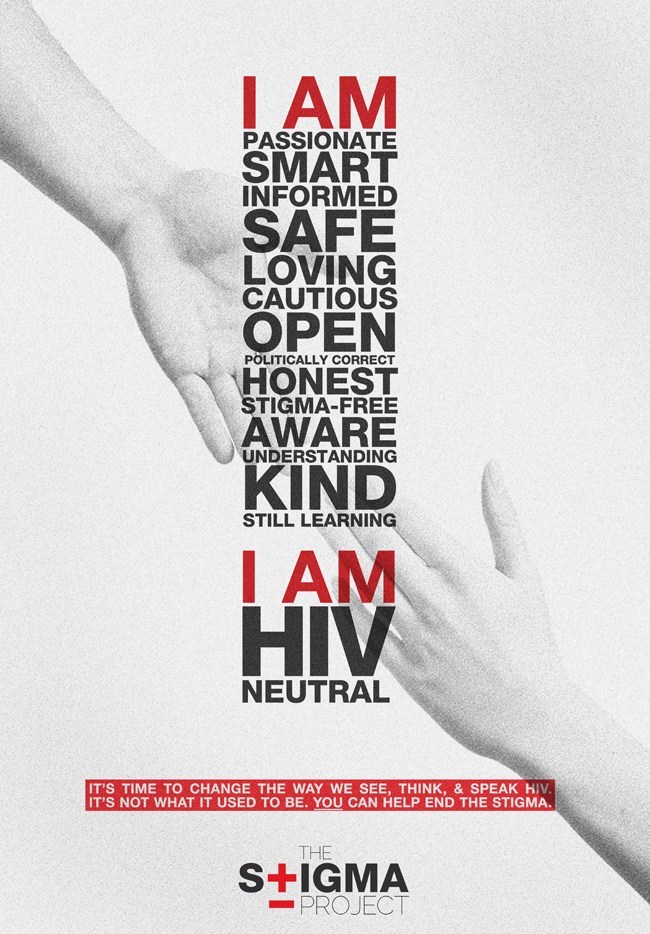
In 2014 I was asked to contribute a piece from an HIV-negative perspective to a monograph on the positive voice, published in the lead-up to the International AIDS Conference in Melbourne. It was written for an audience of HIV sector insiders — practitioners, researchers and policy people — from a ‘pracademic’ perspective, drawing on my experience in practice and my training in cultural studies.

After much back and forth, the editor said it was ~problematic~ and he would only publish if I took significant chunks out, so I withdrew it. Recently the language of HIV neutrality has come back around, and there have been resurgent concerns about serodivision, so the issues raised in this piece remain unfortunately relevant. So here it is. As always, I welcome your thoughts and feedback in the comments.

A personal journey

So far I’m still HIV-negative, ten years since I began working in HIV. It has been on my radar for longer, ever since one of my first partners disclosed he was living with HIV, after we broke up. I didn’t panic then, but the first time someone disclosed their status to me before a casual encounter, I did: the oncoming rush of emotion meant I couldn’t go ahead with sex, and I projected my sense of failure onto him.

My shame afterwards was a wake-up call. I still feel strong emotions when someone discloses to me — not fear of infection, but feeling their vulnerability in that moment. But like a lot of negative men, in my twenties and thirties I undertook a slow and deliberate process of learning how to manage those emotions and respond to disclosure in a skilled way that did not derail the sexual or romantic potential of the encounter.

Continue reading “Strengthening the HIV-negative voice”

What we don’t talk about when we talk about PrEP

Guest post by Steve Spencer, from his presentation on a consumer perspective on PrEP to the 2019 Australasian HIV Conference in Perth (edited for publication by Daniel Reeders)

Conversations changed my life as a PrEP user, and that’s why I’m really excited to bring the consumer perspective to the conversation about ending HIV. Before coming, I asked my social media community for insights. What do they want to tell you? What do they want to hear from you? And what do they demand as PrEP users? I asked them what is good and what is bad, what their hopes are and what their fears are. The lived experience of PrEP is deeply personal and more complex than these binaries, so this is just a snapshot.

We all know the frequently asked questions, we know the topics du jour surrounding PrEP. So I will start by drawing attention to the less discussed topics that, as we approach majority coverage of PrEP in ‘at-risk’ groups, are becoming issues the HIV sector must address.

I am now a person living with HIV, and I can’t help but speak from a dual perspective. As a sector — as a community, in fact — we understood that some people would get HIV when condoms were the only prevention tool we could offer guys who wanted, as they say, to fuck raw. But we are so far away from accepting that PrEP users can get HIV too.

The ‘age of PrEP’ as the ‘end of HIV’, as some see it, presents myriad challenges for those who seroconvert — in rare cases where medication has failed, or more commonly, cases where education hasn’t got through or the regimen hasn’t been doable. Whatever the reason, PrEP users who seroconvert are facing old stigma with a whole new intensity — and this is unacceptable.

PrEP has uncovered the hidden demographics of new diagnoses, and they tell us we won’t be ending HIV any time soon. So any discussion about PrEP and its enormous, mind-blowing success, has to be tempered with the reality that many people aren’t benefiting from it yet, many people will get HIV in the future, and people with HIV are still living with stigma and still need support and respect.

So, what’s the good news about PrEP?

Other than the excellent news it works exceptionally well at preventing HIV, PrEP users are excited that PrEP use is growing and becoming more dynamic. It’s more common to find partners who share the lived experience of being a PrEP user. I remember how difficult it was being an early adopter — all the fears that I had to constantly assuage in others.

Also, static and conservative clinical guidelines are finally relaxing. Use of on-demand, or event-based PrEP is growing and is slowly being endorsed by clinicians as an option. Importantly, our diverse communities with diverse behaviours and diverse prevention needs are beginning to find and share the diversity in PrEP use. They have options for using PrEP that adapt to the uniqueness of their lives. This is truly groundbreaking. We talk about the HIV preventative ‘toolbox’, well, we’re discovering that PrEP is the cordless screwdriver with many different heads.

In terms of access, it’s getting easier and easier to access PrEP. Whether it is through the PBS or online, there are many price options and access options. I would particularly like to draw attention to the innovative 3-for-1 schemes available at a few Melbourne pharmacies, where you get 3 months (a standard script) worth of drug for the price of one month, thanks to a charitable organisation. And we demand greater roll-out of these sorts of schemes – with the listing of PrEP on the PBS, access through many pharmacies became less affordable than buying it online, and making PrEP cheaper should be a goal for pharmacies.

What’s bad about PrEP?

We’re not getting women. We’re missing heterosexual men and bisexual men who aren’t community attached. We’re swinging for but missing trans people. We’re not reaching out to Indigenous communities. We’re missing culturally and linguistically diverse people and overseas-born men who have sex with men. We’re swinging for but still we are missing international students. Clinicians and researchers and health workers see it in the statistics, and we all see it in the changing demographics of new diagnoses. PrEP-users acknowledge this gap and they are also the perpetrators of the stigma against non-users. A gap is being created between PrEP users and non-users, and over time division will be felt in our community.

While it can be argued that PrEP is shrinking the serodivide between negative and positive people, there is undoubtedly miseducation, misinformation, and plain old stigma and discrimination against people living with HIV by PrEP users. Persistent stigma against people living with HIV during this period of significant growth in PrEP use is a scourge – when you see ‘PrEP 4 PrEP’ written on a Grindr profile, this isn’t a sexual preference, it’s a failure of education. It harms the entire community, and those scared men are being let down, because they are not getting support to embrace the science and the life-giving U=U message that should be welded to the PrEP message.

At a practical level, the discussion about cost needs to continue. The medication itself can be relatively cheap (depending on your access options), but doctors and pathology are not cheap. If we are to achieve a greater number of users to help bring down HIV diagnoses, we need to make it as easy as possible to access the entire PrEP combination to ensure positive health outcomes.

As a final point about what we can improve about PrEP, we continue to see doctors misunderstanding PrEP and the unique needs of their patients. When a doctor doesn’t support you to use PrEP, you’re disempowered to protect yourself. They tell you: ‘I’m sorry, we do not promote that behaviour, you are on your own.’ And that’s a problem. Would-be PrEP users experience friction and discrimination from clinicians, and this is a particular problem for people outside of community-attached gay and other MSM — the groups I mentioned earlier. We battled that resistance to daily PrEP and won, now we have that same fight all over again with event-based PrEP. We’re even seeing people report feeling judged when they cease PrEP use.

Prevention decisions are personal choices. They should be informed, but not judged. We should not underestimate the ability of individuals to access cutting-edge information and apply it to their own needs in real time — and to share it, thoughtfully, with their mates. These people need to be supported to achieve the best outcomes. I have experienced this personally, when you’ve done the research, you know your options, and your doctor says you’ve done the wrong thing. I can tell you it leaves you feeling confused, it leaves you feeling awful.

What are the fears of PrEP users?

PrEP users are still afraid of HIV. It is really sad to say. They are still afraid of people living with HIV. It only takes a glance at any online PrEP forum to see the level of fear that persists amongst PrEP users, even among some long-term users. Intergenerational trauma and intra-community division will take a long time to dismantle – a blue pill doesn’t make it go away. 

As PrEP use becomes more mainstream, people starting PrEP often don’t fully understand or engage with the science. Where is our education going wrong, especially around other STIs, when PrEP users are still oppressed by anxiety and fear (and projecting these fears onto others)? Many users still understand HIV as an abstract concept. Speaking personally, what I learnt about HIV after my diagnosis shook up my preconceived notions about what it’s like to live with HIV. More importantly, it taught me how I can be a better PrEP advocate; it has given me a keen eye for the fault-lines in our approach to PrEP and its place within HIV prevention. When we are operating in competition or in silos, we are not working together and it is prohibitive to our goals. 

What are the hopes of PrEP users?

Hope is my favourite topic right now, because there are so many areas of current cutting edge PrEP research that offer reasons for hope. PrEP users want to see injectables, they want to see implants, they want to see a vaccination. These are currently visible on the horizon and they are the future that PrEP users demand soon. We knew, years ago, that taking a pill every single day to keep you safe from HIV would become a thing of the past. Medical innovation will improve on PrEP as we know it, make HIV prevention more simple, more available, and more suited to each individual. Just like the first participants in the early PrEP studies, HIV negative want to do what it takes to make these advances a reality.

PrEP users, like the rest of us, hope for the end of HIV. This can only be achieved with the full endorsement of U=U — the combination of PrEP + U=U is a formidable force to end HIV. We need to listen to HIV positive voices on how this can be achieved. As a young PrEP activist in Melbourne five years ago, I learnt everything I know from people living with HIV. They were formative in how we adapted the PLHIV playbook to the needs of PrEP users and prospective users. This legacy must continue.

We have done an amazing job in Australia and we are world leaders in responding to HIV, from everyone working within the sector, to the grassroots movements and organisations that changed the culture around PrEP and made space for the science to work, to the individual PrEP users that took that first leap of faith. I know faith has very little to do with science, but now the science is in, PrEP users have faith in PrEP, and they have faith in our abilities as a sector, so it’s time to build on our success. We let everyone down when we don’t educate properly on PrEP.

How are we talking about non-daily PrEP?

The most common form of oral PrEP is daily dosing — but it’s not the only game in town. In guidelines launched at the recent International AIDS Society conference in Mexico, the World Health Organisation endorsed what it calls ‘event-driven’ PrEP, and the CDC has endorsed ‘consistently’ taking at least four pills per week. While the evidence supporting non-daily PrEP is rock solid, the language we use to talk about it remains unsettled.

Through my work on the Rinse and Repeat campaign, I have first-hand experience of the language challenges posed by non-daily dosing, and with this post I want to raise them for discussion in the global HIV prevention community.

My perspective in this post reflects the communities I work with and belong to — queer people, trans folks, gay and bisexual men and other men who have sex with men (GBM), and people from migrant and refugee backgrounds (and all of these categories overlap all the others).

(Sidebar: I personally identify as a queer nonbinary person who does ‘gay male’ drag when it helps me connect with the communities and colleagues I’m working with. I’ve felt that disconnect since 2004, and this is my coming-out post. My gender is Daniel, my pronouns: just call me Dan.)

Two kinds of non-daily dosing

There are two approaches recognised by the WHO.

  • Taking two pills at least two hours before sex, and then another pill every 24 hours after that, until two days after your last sexual encounter. The WHO calls this ‘event-driven PrEP’ and ‘2+1+1.’
  • Taking a pill on the same four days each week, e.g. Tues & Thurs & Sat & Sun. (Someone needs to make that a t-shirt.) Also known as ‘T&S’ dosing. This is implicitly endorsed by the CDC but not endorsed by name.

Event-based PrEP

This approach is called different things in different places. It has been called on-demand, event-based or event-driven, intermittent or episodic, ‘disco dosing’ and 2+1+1. The approach was first proven to work by the IPERGAY study in Paris and Montréal, and in French, it’s ‘on demand’ PrEP. That’s what it’s commonly called in the UK as well.

Recently, with funding from Dynamix and help from some creative mates, I developed a resource that illustrates the first approach. The dosing schedule is surprisingly complicated — we often describe it in a single sentence, but when you diagram that sentence out (nerd alert), it involves more than seven discrete pieces of information, some of them relative to each other.

One of the few pieces of communication psychology everyone knows is the 7±2 rule — i.e. most people struggle to hold more than 5-9 pieces of information in their head at one time. And that’s just to remember them; the dosing schedule requires you to process them.

So in the Rinse and Repeat resource, we broke down the dosing schedule into six easy steps that anyone can follow. The short film introduces the broad concept and people can visit the website to find the six easy steps.

In that project, after a fair bit of discussion, I went with ‘event-based’ PrEP. It’s not catchy at all and that’s physically painful to me. The main alternative was ‘on-demand’ and that wording is both catchy and agentic.

And my concern is that people hear the name ‘on-demand’ and think they understand how it works. When I talk about the project, people who weren’t familiar with EBP often said ‘so you only take a pill when you have sex?’

In this case, on-demand means as-needed, but in everyday usage ‘on-demand’ usually means at-will, i.e. whenever you feel like it.

Educators are already telling me they are hearing from people who have messed up the dosing schedule because they didn’t understand it clearly when they started.

The WHO has gone with event-driven instead. They didn’t consult me. Again. (It’s okay, I’m fine, I’ll get over it. Eventually.)

But they also went with 2+1+1. I understand this label comes from PrEP roll-out workshops and focus groups with heterosexual folks and people in low-income countries. Again, it’s catchy and it gets the idea across… kind of. It leaves out the timing, which is pretty important information.

I have the same concern that someone might hear it and think they understand it without further research. In the Rinse and Repeat campaign, I went with the slightly jargon-y ‘event-based’ naming because I want people to google it up before they try it out.

The other problem with 2+1+1 is that it embeds a very heterosexual model of sexual life. Sex once a week on Friday after the kids have gone to bed, one and done. It leaves out people who have more than one encounter (or more than one day of encounters).

With EBP, you take a startup dose of two pills, then a follow-up dose every day, around the same time, until two days after your last encounter. Calling it 2+1+1 obscures the fact that if you keep taking a daily follow-up dose, event-based PrEP can protect you for a week, a month, or a whole season of sex. (Shout out to my peeps enjoying summer in Montréal!)

Anticipation, not planning

In my home country of Australia, campaigns about PrEP have universally focused on daily dosing. I’ve argued that ‘take the pill every day’ has become the new ‘use a condom every time.’ The evidence shows it isn’t required — in the iPrEx trial, nobody seroconverted if they were taking at least four tablets per week. But some people are just uncomfortable thinking about sex outside of a prescriptive normative framework.

So while we knew from the IPERGAY study that event-based PrEP is a thing, people talked about it in a very specific way that implied it’s dubious or only marginally relevant. They say it’s only suitable if you can plan your sex life in advance.

And everyone wants to think of themselves as spontaneous.

The Rinse and Repeat campaign emphasises the flexibility of EBP — the tagline is Whatever comes your way, ‘from an occasional fuck to the occasional fuckfest, event-based PrEP has got you covered.’

And instead of talking about planning, we talk about anticipation — if you’re feeling frisky and you think you might be getting some later today, take a startup dose now. If sex doesn’t happen, no harm no foul.

Exactly the same meaning, without the disparaging connotation. EBP was first tested among sex pigs in France. Les cochons were having a lot of sex. They certainly weren’t scheduling their fucks in dainty little date books. During the IPERGAY study and since, there have been no seroconversions among GBM doing event-based PrEP in France.

Cis women and trans folks

This is really tricky and I want to take a moment to put my remarks in context. In the late 80s and 90s, HIV social researchers described how the epidemiology of AIDS was challenging what Michael Warner has called the ethnic model of LGBT civil rights movement — the notion that ‘gay’ or ‘lesbian’ is comparable to an ethnicity, a relatively self-contained community defined by a common identity and shared culture.

Except there were people being diagnosed with HIV, who identified as straight men and were having sex with men. Or lesbian women who were having sex with gay men. And trans folk, whose lives were not and still are not (IN! TWENTY! NINETEEN!) reflected in epidemiological questionnaires.

The lesson from that was: talk about sexual practices, not identities. (If heterosexual people learned one thing from sex ed, it was “AIDS affects everybody.” Well-meaning but a gigantic distraction from the fact HIV impacts hardest on oppressed and underserved communities.)

In my PhD, I document the way in which the Australian health promotion response to HIV began targeting collective social forms, such as networks, sexual cultures, and communities from the late 1990s onwards. This followed (s l o w l y) after social research that identified particular practices, such as use of crystal methamphetamine, and the practice of fisting, are not independent causes of HIV infection; instead, they are markers of sexual cultures and interpersonal networks with higher HIV prevalence and increased (though quite nuanced) practice of unprotected anal intercourse. So I might refer to sex between men and gay culture in the same piece, talking about different things (a sexual practice, a cultural form) in each case.

When we wrote the first draft of the Rinse and Repeat, I didn’t want to single out trans people or cisgender women — because the diversity of people, bodies, lives and experiences isn’t reflected in those broad labels. Instead, we used positive language, saying that EBP offers protection from HIV transmission during anal intercourse only.

However, there’s now evidence that feminising hormones might affect the way the drugs in PrEP are metabolised, which could, in turn, mean that four pills per week are not enough to achieve protective concentrations. We also know that it takes a lot longer to reach protective concentrations in the urinary tract of people with vaginas/front holes, so EBP does not provide protection for vaginal or front-hole intercourse.

(In both cases, we recommend taking a daily dose for 28 days before having condomless intercourse, rather than doing EBP or T&S dosing.)

So I want to hear your thoughts on: how do we talk about these variations in the protection offered by EBP?

As a communications person, I think it’s simpler and therefore easier to understand if we say ‘we recommend daily dosing for trans folks and cisgender women.’ That’s a positive alternative recommendation and avoids a negative and exclusionary framing (e.g. EBP is not for …).

In this usage, the labels ‘trans folks’ and ‘cisgender women’ do not comprehensively identify all the bodies and practices that EBP won’t work for. In a short message (in a voice-over or across the top of a website) they may function as a sensitising device. If you were not assigned male at birth (AMAB), even if you don’t identify with either label, once you know that protection may vary by trans experience and cis-female embodiment, you know that some further research may be warranted before starting EBP.

(IDK, maybe all this dancing around is just me trying to avoid admitting that this is yet another medical innovation that only benefits cisgender men.)

Your thoughts, please.

Activism and forgetting

Lately I’ve been thinking about forgetting. I’ve been writing hard on my dissertation, and a lot of stuff goes by that I’d love to blog about, but I try to stay focused. All the things that tug on my consciousness lately involve forgetting, so I am loath to let them go unmarked. This post is necessarily schematic — touching on things I wanted to note in passing, even though I can’t give them the full consideration I’d like to. (I welcome different perspectives in the comments.)


#PrEP4All means patents for all

Earlier this year, PrEP4All, an off-shoot of ACTUP NYC, launched a campaign to demand the United States enforce the patent held by its National Institutes of Health (NIH) over the use of the drug combination TDF/FTC for pre-exposure prophylaxis (PrEP).

The pharmaceutical company Gilead Sciences holds the patent on the drug combination — for another year or three, at least — and has been targeted by activists over its practice of ransom pricing. Indeed, the campaign explicitly links outrage over greedy pricing and enforcement of the patent over PrEP. It demands the US government tax the profits Gilead makes when its drug is purchased for use as PrEP.

The campaign is quite explicit about calling back to the early days of ACTUP when activists fought the FDA over its sluggish approval process for AZT, and pharmaceutical companies over their patent and pricing strategies.

Peter Staley, the wealthy and photogenic activist who took part in those protests and features prominently in films like How to Survive a Plague, said the campaign reminds him of those early days and has described the epidemiologist James Krellenstein, one of his fellow instigators of the anti-Gilead jeremiad, as the future of the movement.

Who’s missing from this picture? L-R: James Krellenstein, Peter Staley, Jim Eigo, Larry Kramer, Matt Ebert (photo posted by Peter Staley, 9 Dec 2015)

The history-making around AIDS demands heroic ‘leaders’, and leaders are assembled from archival footage without much reflection on who got filmed, who could afford to come out as HIV-positive and get arrested at protests, and who didn’t/couldn’t and for what reasons. This myth-making centres educated white men and erases both queer people of colour and ACTUP’s autonomous collective organising practices.

Forgetting isn’t negligent. Forgetting is enacted. Even in the brain, forgetting is an active process. In culture, forgetting occurs through selectively retelling some narratives instead of others, and letting some narratives and not others shape social action.

The foundational nostalgia of the PrEP4All campaign forgets the entire world outside of white, middle-class, educated New York. What frustrates me is the faith this activism places in the American legal system and intellectual property laws. It consciously forgets the utterly malign role patents played in making HIV treatments inaccessible in low-income countries.

The global patent regime was quite explicitly formulated and advocated by the pharmaceutical industry, prosecuted by the United States Trade Representative, and enacted through the creation of the World Trade Organisation and the Trade Related Aspects of Intellectual Property (TRIPS) regime (Harrison, 2004).

That victory was only overcome, and overcome only temporarily, by the concerted effort of activism encapsulated in the Doha Declaration (2005). The TRIPS regime means that a patent granted in the United States can be enforced around the world. Combined with investor state dispute settlement (ISDS), it means Gilead could sue for expropriation if the United States only enforced the patent in the US itself. Patent enforcement is all or nothing.

It also forgets the trade war and the American exceptionalism that are the official policy of the White House. The ultimate target of the campaign is Trump himself — who has already shown a willingness to appropriate HIV prevention in his political messaging. In the context of a trade war, he is more than capable of announcing plans to enforce the patent worldwide within his favoured rhetoric of ‘making others pay their way,’ as he constantly does with Mexico and has done with NATO.

At a time when we are furiously trying to expand access to PrEP in high-prevalence countries — not all of which are low-income countries eligible for the exemption laid out in the Doha Declaration — encouraging the US government to enforce a patent over PrEP is deeply misguided.


Better than a condom, but undetectable is unmentionable?

My next two case studies are drawn from Australia. This week we saw a poster stuck up in urban Melbourne, announcing that PrEP works better than condoms. It cites a CDC estimate of condom efficacy as a range from 72-91%. This, too, involves a conscious forgetting of the experience of condom use over the nearly 40 years of the HIV epidemic in gay culture and queer communities.

Poster shown on a wall in Melbourne saying "See It Clearly 2020: PrEP BETTER THAN A CONDOM with a bar chart showing PrEP at 99% and Condom, in grey, 72-91%, a CDC citation, and below that, PrEP Works, One Pill A Day, 'concerned about STIs? check out 100mg doxycycline daily.'
The typography alone is homophobic.

A friend who was involved in Australia’s first gay community HIV prevention campaign ‘Rubba Me’ mentions that gay and bisexual men took up condoms before any studies had shown they worked. We knew they worked, he said, because we were having plenty of anal sex with condoms and we kept testing negative. Prof Kane Race calls this a commitment to ‘intimate experiments,’ a willingness to take risks and embrace uncertainties. (Just like the first people to try PrEP.)

Condoms work when they are used correctly. There are countless men who have sex with men who have been HIV-negative for decades, because they used condoms correctly and personally felt no problem with condoms.

I personally hate condoms. I advocate PrEP and use it when I need it, but I strongly prefer U=U. However, condoms are cheap and they are everywhere, and the same cannot be said for PrEP and even HIV treatment, particularly in low-income counties and countries. Telling people that condoms don’t work is bad prevention strategy.

The CDC estimate was calculated by averaging out studies that included populations in which incorrect use of condoms is common. Just as we report on the 99% efficacy of PrEP when used correctly, we should report condom efficacy on the same basis.

In the 1980s, Prof Juliet Richters studied condom use in three cohorts: heterosexuals, gay and bisexual men, and sex workers. This was a rigorous study — participants were asked to save condoms after use and they were inspected by the researchers. (Talk about intimate experiments.) In a six month period, Richters and her colleagues did not find a single breakage among gay and bisexual men and sex workers.

The study was the original source of a claim that circulated widely in the 1990s — asserting that condoms are only 90% effective. It was cited by homophobes and even by some public health experts as an argument against gay men having anal sex at all. It was based on the failure rate of condoms among Richters’ heterosexual study participants. In other words, the circulation of that claim enacted an erasure of queer people and sex workers, and our skills and creativity in protecting ourselves. So I am extremely troubled to see a similar logic being used to promote PrEP.

Crucially, those posters also forget to mention that U=U is even more effective than PrEP. U=U means ‘undetectable equals untransmittable.’ If a positive person has undetectable viral load, they cannot pass on the virus through sex.

That’s an important message at a point in time where people are saying “PrEP 4 PrEP” in their profiles on hookup apps. As Alexander McClelland points out in a recent feature, the widespread uptake of PrEP has, to some extent, severed our shared membership, whether positive or negative, in a community living with HIV. He writes:

I’ve heard this from guys many times: that my viral undetectability is of no interest. They are on PrEP, so it doesn’t matter what’s going on with anyone else. (…) The moment to have a bonded connection over our shared relationship to HIV, negative or positive, is no longer on the table. For some of us who have lived with HIV for a long time, this can be refreshing, and for others, disconcerting. 

McClelland (2018)

As both Bruce Richmon and Damon L Jacobs have argued, in order to avoid these new prevention technologies deepening the ‘serodivide’ in our communities, it is essential that we always talk PrEP and U=U together.

On a more technical note, the poster says ‘PrEP Works, one pill per day’. This completely ignores non-daily dosing strategies like event-based PrEP and T&S dosing, even though the World Health Organisation just came out saying both are just as effective as daily PrEP.


Blood equality

Lastly, we are now seeing a movement for what it calls ‘blood equality’, advocating the right for men who have sex with men (MSM) to donate blood without exclusion periods. This argument is formulated in a few different ways.

One version argues that we’ve achieved marriage equality and this injustice is ‘what’s next’. This forgets many other more pressing needs, like the acceptance of queer people living in areas that overwhelmingly voted ‘no’ on Australia’s marriage plebiscite, or the fact that a significant minority of people living with HIV in Australia don’t have access to Medicare-funded HIV treatment.

Some versions have argued that it’s matter of human dignity to allow blood donation. When I last looked at this issue, in the mid-2000s, I used this argument myself. I drew on Richard Titmuss’ argument that people donate blood out of altruism, which in turn drew on Mauss’ theory of society as gift relationship. Now, I realise that human dignity has to be universal or it is just special pleading. In the case of ‘blood equality’, the claim based on human dignity forgets (or accepts) that people living with HIV are excluded.

A more recent formulation argues that even a 3-month exclusion period is intolerable and that behavioural screening should be enough. The idea is that we can just ask people about their recent sexual behaviour and decide whether to let them donate blood. This forgets nearly forty years of experience, which tells us that choosing partners (or donors) based on self-reported risk is not effective protection.

This claim also forgets the community and clinical experience of seroconversion, which doesn’t always happen overnight; in some people it does take up to 3 months after infection for viraemia to emerge and antibody production to occur. And PrEP actually complicates matters even further — even with resistance mutations, TDF/FTC can be enough viral suppression to prolong the seroconversion process, so any exclusion period less than 3 months is very unlikely.

Finally, this advocacy also forgets the sex-positivity that has always been central to the Australian community-based response to HIV/AIDS. As the law student, student politician, and Labor think-tank staffer Connor Wherrett recently wrote in the queer (sic) edition of Honi Soit,

“The fact is, blanket policies like this discourage healthy MSM giving blood. A same sex male couple, despite being together for a year and only having sex with each other, and being regularly tested, is treated the same way as a gay man who has multiple unprotected sexual encounters with different individuals a week.” (source)


To reiterate: forgetting is not just a matter of not knowing, or letting something that was known slip away. It is produced through social action. Although in social movements we constantly bang on about Foucault’s notion of discourses, my analysis here draws on his conception of the archive — the collective repository of prior discourses and the practices that select which discourses operate in the present. These campaigns and interventions are among those practices.

My work draws heavily on Foucault, who is not typically interested in the role of specific actors and human agency in discursive practices. I ran these reflections in dot-point form past Theodore Kerr, a Brooklyn based writer, organizer, curator and artist, past convenor of Visual AIDS and collaborator in the ‘What Would an HIV Doula Do?’ collective. He reminded me that these acts of forgetting reflect the strategies and social placement of particular individuals — seeking to adopt positions of leadership in social movements, and taking perspectives that reflect their own privilege and their lack of meaningful engagement with the people, politics and lived experience of the Global South (or, indeed, the American South).

I recently re-watched Robin Campillo’s 120 Battements Par Minute (distributed in the Anglosphere under the title BPM). Just like the first time, I sat there in darkness, trying not to howl as all the moisture in my body evacuated via my tear ducts. It is a powerful evocation of the experience of HIV and AIDS in France in the early 1990s, shown through the lens of ACTUP Paris and its actions (and debates) over HIV treatments access. The closing image is of a die-in, on a cobbled street, at night, beside a church, calling on the French government to acknowledge the crisis, and the brutal fact of death and dying. It shows forgetting as a practice of abandonment: people in power knew and did not care.

Further reading

Alexander McClelland’s ‘Unprepared’ in Maisonneuve (Spring 2019)

‘I’m forty now. Some have said that the PrEP era means we are all “HIV equal,” dispensing with the negative and positive. This so-called new era can be confounding, at least to me.’

Meanwhile, Dion Kagan, Positive Images (IB Tauris, 2018) offers a reminder that remembering is complicated, too:

‘Making AIDS into history, as I suggested earlier, can act as a form of temporal estrangement, a kind of prophylactic distancing that disavows the present day conditions and urgencies of HIV. As [Theodore] Kerr writes, the poster campaign (‘Your Nostalgia is Killing Me’, Chevalier & Bradley-Perrin, 2013) was a protest against the negligence of nostalgia, expressing the feeling that the artist’s “current life chances as people living with HIV were being reduced by a focus on AIDS of the past. The stigma, health, and social realities that they experience were being ignored in lieu of a look back.”’ (p227)